Identity Is the New Compute

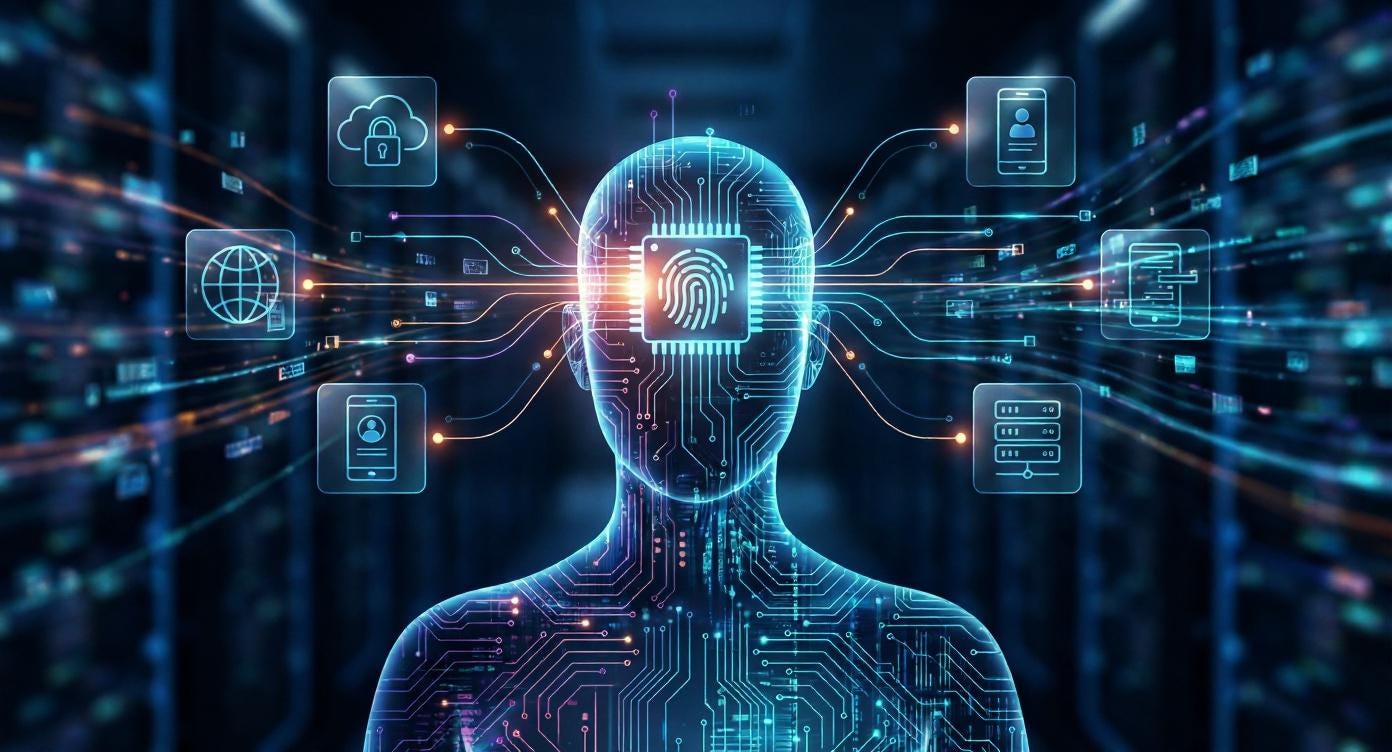
The internet was built without an identity layer.
For 40 years, we patched this bug with band-aids. First, we used IP addresses. Then, cookies. Then, the username/password combo. Finally, we surrendered to “Login with Google” and “Login with Facebook,” allowing the aggregators to become the passport officers of the digital world.
This system worked, barely, for the web of humans. It will collapse instantly in the web of Agents.
We are entering a phase where the majority of internet traffic will not be human. AI agents—executing complex, multi-step workflows—will soon outnumber people 100 to 1. When an agent tries to book a flight, move capital, or post content, the receiving server faces a critical question:
Is this a bot swarming me, or a verified agent acting on behalf of a human?
In this new environment, Identity is no longer just a profile. Identity is the new compute constraint. It is the scarcity layer in a world of infinite generated content.
The Collapse of “Login”
The old identity model was based on Authentication: “Can you prove you know the password?” The new identity model must be based on Authorization and Provenance: “Can you prove you are human, and can you prove you authorized this agent?”
Consider the friction today. If you want your AI assistant to buy a concert ticket, it hits a wall. It cannot solve the CAPTCHA. It cannot receive the 2FA SMS. It cannot “Login with Google” because Google’s fraud detection sees a non-human behavior pattern.
To make the Agentic Web work, we need an identity layer that is:
Portable: It must live in the user’s local environment (the browser), not on a centralized server.
Verifiable: It must prove “Humanity” without revealing personal data (Zero-Knowledge).
Agent-Readable: It must allow users to delegate permissions (”Spend up to $50”) to their software agents.
This is why the browser—specifically the Sovereign User Agent—is the only logical home for identity.
Enter the .brave Identity (DID)
This is the strategic necessity behind the .brave Decentralized Identifier (DID).
Most people think of Web3 names (like .eth or .sol) as “vanity plates” for crypto wallets. This view is too narrow. A .brave identity is a functional root for the AI age.
It is a cryptographically secured container that holds your reputation, your payment rails, and your verification state.
When you browse with a .brave identity:
You carry your “Humanity Proof” with you. You don’t solve CAPTCHAs; your browser presents a Zero-Knowledge proof that says, “I am a real user with a history of organic attention,” and the website lets you (or your agent) in.
You carry your “Reputation” across silos. If you are a high-value user on YouTube, you should be treated as a high-value user on a new video startup. Currently, that reputation is locked in Google’s database. With a DID, your history of verifiable attention belongs to you.
You provide “Permissions” to Agents. You can sign a cryptographic key that tells your AI: “You are authorized to use my .brave identity to negotiate travel bookings, but you cannot sign contracts.”
The Permission Layer
This shifts the power dynamic of the internet.
Currently, identity is a control mechanism for platforms. If Twitter bans your account, you lose your audience (your social graph) and your history. Your identity was merely a rental agreement.
In this thesis, identity becomes infrastructure.
By anchoring identity in the browser (the User Agent) and securing it on-chain (via .brave DIDs), we turn identity into a portable asset. This is the prerequisite for the “Trust Stack.”
For Users: It means privacy. You prove you are eligible (over 18, human, solvent) without revealing who you are.
For Developers: It solves the “Cold Start” problem. You don’t need to build a user base from zero; you can trust the “.brave” reputation score brought in by the user.
For AI: It provides the “safety rails” required for autonomous commerce.
The Infrastructure Race
The next great battle in tech is not about who has the best LLM. It is about who controls the registry of verified humans and their agents.
Worldcoin wants to scan your iris. Apple wants to use your biometrics. Google wants to use your login history.
Brave takes a different approach: Proof of Attention. We know you are human because we see the organic, messy, real-time way you interact with the web every day. That data, secured locally and anchored by a .brave DID, creates the most robust, privacy-preserving identity signal in the world.
Identity isn’t a badge. It’s the key to the machine. And the browser is the hand that turns it.